
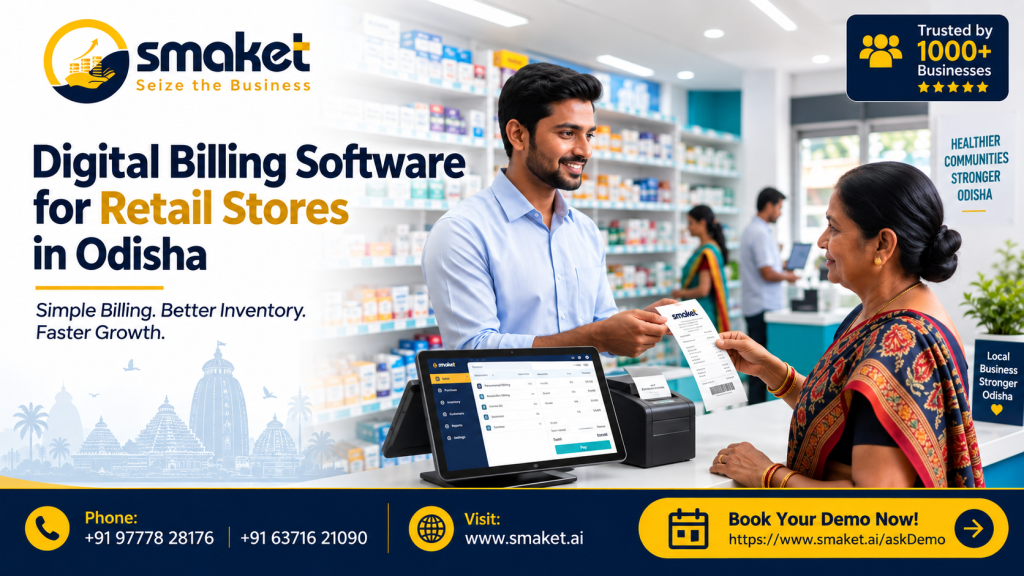
Retail businesses are changing as technology becomes a bigger part of everyday store operations. From generating invoices to managing inventory and monitoring sales, many tasks that were traditionally handled manually can now be managed through digital systems.
For retail stores in Odisha, digital billing software can provide a more organised way to handle daily transactions and business records. Instead of depending entirely on handwritten bills, registers, or separate spreadsheets, retailers can use software to manage billing and related activities from a digital platform.
Whether it is a hardware store, mobile shop, electronics store, grocery shop, or another retail business, the right billing software can help simplify everyday operations.
But what exactly should retailers look for in digital billing software, and how can it support their business?
Let’s explore.
What Is Digital Billing Software?
Digital billing software is a computer or cloud-based system that helps businesses create invoices and maintain records of their sales transactions.
Depending on the software, it may also include features for:
- Product management
- Inventory tracking
- GST billing
- Sales management
- Customer records
- Expense tracking
- Business reports
- Payment records
Instead of maintaining separate physical records, businesses can use a digital system to organise important information in one place.
For a growing retail store, this can make everyday billing and record management more convenient.
Why Are Retail Stores Moving Towards Digital Billing?
Traditional billing can work for businesses with a small number of transactions. However, as a store grows, managing products and sales manually can become more time-consuming.
A retailer may have to update:
- Product prices
- Stock quantities
- Sales records
- Customer details
- Purchase information
- Daily revenue
- Monthly sales
When these records are maintained separately, finding specific information can take additional time.
Digital billing software can connect several of these activities within one system, helping retailers maintain more organised records.
Key Features of Digital Billing Software
1. Digital Invoice Generation
One of the primary functions of billing software is creating invoices.
Instead of writing each bill manually, retailers can enter the products and quantities into the system and generate a digital invoice.
This can help make the checkout process more structured, particularly during busy business hours.
2. Inventory Management
Inventory is an important part of retail operations.
Retailers need to know what products are available, what has been sold, and which items may need to be reordered.
Digital billing software with inventory functionality can help maintain product and stock records.
For example, an electronics store may manage hundreds of products across different categories. Keeping this information digitally can make inventory monitoring easier.
3. GST Billing
Businesses that are required to follow GST rules need to maintain appropriate tax-related records.
Digital billing software can provide GST-related invoicing features, depending on the system.
However, businesses should verify their individual GST obligations and applicable rules rather than assuming that using billing software alone guarantees compliance.
The official GST portal provides information about GST registration, returns, invoices, and other GST processes.
4. Sales Tracking
Digital billing systems can record sales transactions as they take place.
This gives business owners a structured record that can be reviewed later.
Retailers may use sales information to understand:
- Daily sales
- Monthly sales
- Product movement
- Transaction volume
- Sales trends
Having organised sales information can support better business planning.
5. Product Management
Retail stores may sell hundreds or even thousands of products.
A digital product catalogue can help retailers organise information such as:
- Product name
- Category
- Price
- Quantity
- Tax information
- Stock status
This can reduce the need to search through physical records when preparing a bill.
6. Business Reports
Reports can provide a quick overview of business activity.
Depending on the software, retailers may have access to reports related to sales, inventory, purchases, expenses, and other operations.
These reports can help business owners understand what is happening in their stores without manually calculating information from multiple registers.
Digital Billing Software for Different Retail Stores in Odisha
Different retail businesses have different requirements. Digital billing software can support several types of stores.
Hardware Stores
Hardware stores often manage a wide variety of products, from tools and fittings to electrical and construction-related items.
Digital billing and inventory management can help organise product information and sales records.
Mobile Stores
Mobile shops manage smartphones, chargers, cases, cables, earphones, and other accessories.
Digital billing can help retailers manage these products while maintaining sales and inventory records.
Electronics Stores
Electronics retailers may sell televisions, appliances, speakers, computer accessories, and other products.
A digital system can help organise product details and simplify billing.
Grocery and General Stores
Grocery shops often handle a large number of fast-moving products.
Digital billing and inventory management can help maintain product records and track sales.
Benefits of Digital Billing Software
Faster Billing
Digital invoice generation can make routine billing quicker and more organised.
Better Record Management
Sales and product information can be stored digitally rather than being spread across physical registers.
Easier Inventory Monitoring
Retailers can maintain digital records of products and stock movement.
Reduced Manual Work
Automating repetitive billing and record-keeping tasks can save time.
Better Access to Sales Information
Digital reports can make sales information easier to review.
Supports Business Growth
As a store expands, a structured digital system can help manage a larger number of products and transactions.
Digital Billing vs Traditional Billing
| Feature | Traditional Billing | Digital Billing |
| Invoice creation | Manual | Digital |
| Sales records | Registers/paper | Digital records |
| Inventory updates | Manual | Software-based |
| Product information | Physical records | Digital catalogue |
| Sales reports | Manual calculation | Digital reports |
| Data access | Physical documents | Software interface |
| Scalability | Can require more manual work | Supports a digital workflow |
How to Choose Digital Billing Software for Your Store
Choosing billing software should depend on the specific needs of the business.
Before selecting a solution, retailers should consider:
Business Size
A small shop may have different requirements from a large retail outlet.
Number of Products
Businesses with large inventories should look for suitable inventory-management capabilities.
Daily Transactions
Consider how many bills the store generates each day.
GST Requirements
Check whether the software provides the GST-related features required for your business.
Ease of Use
Employees should be able to learn and use the software without unnecessary complexity.
Reporting
Look for reporting features that provide the information needed to manage the business.
Customer Support
Check what technical support and assistance the software provider offers.
Data Security
Businesses should understand how their data is stored, protected, backed up, and accessed.
Smaket Digital Billing Software for Retail Businesses
For retailers looking for a digital solution, Smaket provides billing and business-management software.
According to its official website, Smaket offers features including GST invoicing, stock management, accounting, expense tracking, and reporting. The platform also describes multi-device and multi-user functionality. Smaket Billing Software
This can make it relevant for small and growing businesses that want to move their billing and related business activities from manual processes to a digital system.
Frequently Asked Questions
What is digital billing software?
Digital billing software is a system that helps businesses create invoices and manage sales-related information electronically.
Is digital billing software useful for small retail stores?
Yes. Small retailers can use digital billing systems to manage invoices, products, inventory, sales records, and other business information.
Can hardware stores use digital billing software?
Yes. Hardware stores can use digital billing software to manage product information, sales transactions, invoices, and inventory.
Can mobile shops use digital billing software?
Yes. Mobile stores can use billing software to manage smartphones, accessories, sales transactions, and stock records.
Can electronics stores use digital billing software?
Yes. Electronics retailers can use it to organise product information, generate invoices, and maintain sales and inventory records.
Is digital billing the same as GST billing?
Not necessarily. Digital billing refers to creating and managing invoices electronically. GST billing refers to invoices and records that meet applicable GST requirements. Businesses should check the GST rules relevant to their circumstances.
Conclusion
Digital billing software can help retail stores in Odisha move from manual record-keeping toward a more organised digital workflow.
From generating invoices and managing products to tracking inventory and reviewing sales information, digital systems can simplify several everyday retail activities.
For hardware stores, mobile shops, electronics retailers, grocery businesses, and other small and growing stores, the right billing solution can provide a foundation for broader digital transformation.
As retail technology continues to evolve, billing can become more than simply creating an invoice. It can become part of a connected system that brings together billing, inventory, sales data, analytics, automation, and smart-store technology.